They’re my women’s dresses

In 2011, transgender comedian Eddie Izzard was interviewed on the Australian talk show The Project. As clips from Izzard’s live shows played, one of the interviewers said, “It’s wonderful watching these highlights, it’s a journey of outfits for you. Famously, you’ve dressed up in women’s dresses.” Izzard responded, “No, I wear dresses. They’re my dresses, I buy them. It’s like when women wear trousers, they’re not cross-dressing. They’re not wearing men’s trousers, they’re wearing trousers.”
No, I wear dresses. They're not "women's dresses."
Someone liked that quote enough that they made one of those distracting animated gif sets that are all over Tumblr, and people have been reblogging it around the world. After it showed up on my dash for the third or fourth time I said, “I gotta write a post about this. Izzard is probably the trans person I admire most in the world, but I disagree with him on this.” The Transfeminist Geometer said, “Let me know if you write a post. I agree pretty strongly with Eddie Izzard, so I’d be interested to read it.” And here it is.

There is one interpretation of “they’re my dresses” that could be said by someone who identifies as a woman. It means that of course they’re women’s dresses, because I’m a woman, so there’s nothing noteworthy about me wearing them.

I don’t think Izzard is identifying as a woman here, with his beard and all (although it would be damn radical if he did). I think he’s saying it as a statement of sartorial freedom, along the lines of the people who make utilikilts, and the fashionistas who tell us every so often that this is the year when men will start wearing skirts again. It means that these dresses may have been designed for women, but once I pay for them they’re mine, so they’re men’s dresses or transvestite’s dresses or something.

I disagree with Izzard here because for me the point is that they are women’s dresses. I don’t have any particular interest in a utilikilt or a men’s skirt. In fact, last week I went out wearing leggings under a sweater and jacket, but I’m thinking I don’t feel like wearing that anymore because they looked too much like the kind of spandex pants a guy might wear.

It’s like if you imagine a society in the future where everyone wears identical jumpsuits, but the women’s jumpsuits have one button more than the men’s. The transvestites will all want that extra button. Not because they like an extra button, but because it’s a woman’s button. That’s why I have women’s dresses in my closet. My women’s dresses.

Obviously, Izzard has a right to his own feelings about his dresses. He’s not wrong for that, and neither is the dude in a utilikilt, or the transwoman who buys her women’s pants at the Men’s Wearhouse. My disagreement with them is purely that I having different feelings.

But I wonder how different Izzard’s feelings really are. It’s possible that he thought that up just because he was tired of answering the same question about “women’s dresses” for so many years and wanted to say something different, just to mix things up and be funny. Kind of like I’m pretty sure he was joking when he told Greg Kilborn that the police shot him for shoplifting a makeup kit when he was a teenager.

Concerns about birth rate concerns

I grew up in the seventies, with “future shock” and other environmental doom about out of control population growth. The argument makes a certain sense: we have only so much room, and we can only grow so much food. As Malthus observed over two hundred years ago, if the population increases faster than the carrying capacity of the land, misery is the result. The more people we have, the more hunger and pollution.

Imagine my surprise, then, when I started to hear stories on the news that were concerned with declining birth rates. Low birth rates can lead to work going undone, especially work supporting the elderly. It can lead to the bankruptcy of pension plans and even Social Security. They tell us it’s depopulated Russia, and the Japanese are worrying too! So which is it? Is a low birth rate good or bad? Do these people even talk to each other? And what does all this have to do with transgender issues?

I’ll connect this with trans politics in another post, but first, a low birth rate seems to be good for the planet overall. The population bomb people and the low birth rate people don’t talk so much to each other, but there are occasional examples. Matthew Connelly and Hans Rosling observe that as women get more power, education and birth control, populations stabilize, so they predict that the world’s population will stabilize as more regions industrialize.

One key thing to note about the “low birth rate” alarmism is that it’s almost never about the worldwide birth rate. It’s about the birth rate of a country, an ethnic group, a religious group or even a race, relative to another. You can see that in the concerns of Cardinal Meiser and the Russian elites, which are both about “the Muslims” outbreeding “us” – German or Russian Christians. And if you’re concerned about that race part, that should tip you off about the others, because they’re basically the same thing. A race is just an ethnic or religious group fortified with biological essentialism.

Concern about national birth rates is also the same as concern about ethnic birth rates, because low national birth rates are only a cause for concern if there are strong restrictions on migration. If population levels are the only reason for concern, then immigration is just as good a remedy as procreation.

At its root of all of this lies a desire for more “us” and less “them.” This is an ancient tribal feeling, and it makes perfect sense from an evolutionary point of view. But from the point of view of fairness and kindness, it sucks. “Us and them” is fundamentally opposed to “all men are created equal.”

Obsession with “our” birth rate is part of the reason some parts of the world are still struggling with overpopulation. It’s also a primary motivator for hatred of trans people. I’ll get into all that in a future post, but in the meantime when you hear concern about birth rates, take it with a grain of salt.

Skepticism, faith and fearmongering

I’m frustrated. I just put together a draft post about how it’s hard for me, as a trans person who tries to be skeptical, to believe in gender identity. Now, television psychiatrist Dr. Keith Ablow has written that he doesn’t believe in gender identity, and uses that in an argument that children shouldn’t be allowed to choose the gender of the bathroom they use. And then professional troll Bryan J Fischer picks up on it, citing “the truth that we find in the Scriptures.” Great. Well, let me deal with these guys first.

Screen capture by Media Matters
There’s not much to say about Fischer. Despite centuries of trying, nobody’s yet found scientific proof of the existence of God, or Satan, or the “truth” of the Bible, or the effectiveness of prayer. If you’re going to believe in those, you might as well believe in gender identity, the True Self, the Authentic You, and the Two Spirits. Or not.

Ablow (who in happier days provided a national platform for Betty Crow to declare her transition) has an argument that’s a bit more challenging because it’s not so obviously faith-based. Yet, right at the point where he begins to challenge bathroom rights, he admits that “data is sorely lacking” to support the idea that if kids are exposed to other kids with female anatomy who are treated like boys it will “do harm to their own developing sense of self.” And yet he feels that the possibility is so strong that we need to protect kids from it.

Later he claims, with absolutely no supporting argument, that he doesn’t see “anything but toxicity from the notion of a person with female anatomy feeling free to use the urinal in the boys’ rest room while a boy stands next to her and uses one, too,” and warns that bathroom rights will create “completely unnecessary anxiety related to whether they should be doing some sort of emotional inventory to determine whether they’re really going to turn into men, once and for all, or find out they’ve been suppressing the truth that they’re actually women.”

There is a coherent argument in the piece: that it is a lie to say that the question of gender identity is settled to the point where we can simply take someone’s word about what their gender is. So far, that’s a solid skeptical observation: the whole business with uterine hormone baths and the bed of the stria terminalis is pretty shaky science, but trans dogmatists claim that it’s The Established Truth. It’s pretty strong to say it’s a lie; it’s more like wishful thinking.

Now, it is this “lie” that Ablow claims will harm the children’s sense of self more than the gender stuff. But if you think about it, that’s a really weird idea. Kids are constantly being lied to by adults about everything from the Easter Bunny to Moses parting the Red Sea. Did I miss the editorial where Ablow denounced the threat to kids’ sense of self posed by the myth of hairy palms? Where did he call for the impeachment of President Bush for “a powerful, devious and pathological way to weaken them by making them question their sense of safety, security and certainty about anything and everything” – this myth of the War on Terror?

It’s pretty clear that this argument about “a lie that can steal their ability to trust adults” is bullshit. Ablow doesn’t actually believe that adults lying to kids is that big a threat. His skepticism about trans dogma is just a fig leaf for his true concerns (completely unsupported by any evidence) that kids will catch the trans from their classmates.

A true skeptic who was genuinely concerned about this issue might call for a temporary moratorium on bathroom rights, but would want to see the issue explored as soon as possible. After all, it’s obvious that the kids who want to live as the other gender aren’t being well served by the current system. It’s a testable hypothesis, this idea that kids can catch the trans by being around other kids whose non-normative gender expression is tolerated by authority figures. You might expect that a freethinker like Dr. Keith would want to investigate this hypothesis. For some reason I’m skeptical.

We don’t hold elections

After I posted my take on the “transgender/transgendered” debate on Facebook, a friend-of-a-friend who’s a gay man with some inside knowledge mentioned that in deciding to endorse “transgender,” his organization talked to representatives of several national transgender organizations. While that’s way better than nothing, it’s not enough information for them to be able to say “this is what the trans community wants.” These “leaders” don’t actually represent any of us. There is no way to find out what “the trans community” wants, because we don’t have a collective decision-making process.

old-voting-machine-adWhether it’s the “-ed” suffix, the space in “trans woman,” the use of the “cis-” prefix, the declaration of “transvestite” as taboo, the freakout over “princex,” generally the proclamation du jour of this term or that as being preferred, dispreferred, offensive, indispensable, etc. – it’s all one single person’s opinion, more or less well informed. If it gets picked up by two people, then it’s three people’s opinion. It never gets to be what “the trans community” wants.

None of these people asked me if, as a linguist, I approved of the term “cis.” Nobody asked me if, as a sociolinguist, I agreed that it would be good for trans rights to declare “transvestite” taboo. Nobody asked me if, as a trans person, I wanted people to use the space in “trans woman” to browbeat potential allies. I never got a ballot for the referendum, and I never got to vote for a rep to the Trans Grand Council.

More importantly, nobody sends magical owls to make sure that all the closeted transvestites and stealth transsexuals get their ballots. Nobody badgers the trans people who might be kind of busy with work, or raising kids, or next week’s model railroad exhibition, to make sure they take the time to register their opinions on the matter.

No, what we get are the voices of people who are thinking about this stuff all the time. Those who spend their hours on Tumblr and Facebook puzzling out the optimal arrangement of acronyms, affixes and punctuation to finally bring down the patriarchy. Those who collect dues with the promise of lobbying our elected officials to pass laws protecting us, and can’t stop thinking about it on their downtime. And of course, those who are in mid-transition and living with the trans nonstop and completely unable to think of anything else. Not exactly representative of all trans people.

So if you’re not trans, please do me a favor: the next time you read about the Words Not to Say on Buzzfeed, or get your ear bent by your buddy Kyle about how appropriative some punctuation mark is, or hear from the Legislative Director of the National Council on Trans Women-Gender/Rights that “trans” is exclusionary, please take it with a grain of salt. And if you are trans, the next time you get that great idea about How the Ampersand Oppresses the People, please use I statements. Don’t claim that you, or anyone, knows what “the trans community” thinks or wants or believes. We don’t hold elections, and we definitely didn’t elect you.

Why I prefer “transgendered”

The “transgender/transgendered” debate popped up tonight, first on a Q&A by Zinnia Jones (aka Lauren McNamara):

Point: The structure of “transgendered” suggests action, as if it were something you were subject to – that you are a person who has been “transgendered” and that is the reason why you exist in your present state. We wouldn’t say “gayed” or “lesbianed”.

Counter-point: Other words of similar construction, like “gifted” or “left-handed”, do not imply action, or that you’re only this way because you were subjected to something.

Meta-point: “Transgendered” bothers some people and use of it will lead to this coming up and distracting from whatever you were originally talking about. “Transgender” does not pose this issue. Therefore, use of “transgender” is preferred.

Ali Edwards expanded on it for her transgenderscience Tumblr:

All excellent points. To add a linguistic angle:

Adjectives with -ed endings tend to express emotions and feelings. “I am frightened,” “That is amazing,” etc. Adjectives with -ed were also almost always originally verbs (to frighten, to amaze). In fact, that’s why “gifted” has the -ed — it’s built of the old verb form of to gift.  

Transgender is not a verb. You can’t “transgender” something. A lot of transphobes believe you can, (“These durn libbruls are gonna transgender my boy if we don’t stop ‘em!”), but you can’t. 

Transgender is an adjective, though, and as Lauren pointed out it describes a “state.” Like most adjectives that describe qualities of a noun, it doesn’t take a suffix. The sky is not “blued,” it’s “blue.” The glass is not “half-fulled,” it’s “half-full”. My mom isn’t “femaled,” she’s “female.” And I am not “transgendered,” I am “transgender.”

For a real linguistic angle, let me as a linguist endorse the explanation of my friend Pauline Park (who is not a linguist):

Adding an ‘ed’ to a verb to create an adjective is in fact a very common construction in English, and the fact that an adjective is created from a verb doesn’t mean that it isn’t an adjective. Similarly with ‘transgendered.’ When we talk about people, we ordinarily say that they are ‘gendered,’ using an adjective created by adding ‘ed’ to ‘gender.’ It would be both grammatically incorrect as well as bizarre to say that a child is ‘gender,’ while it makes perfect sense to say that a child is ‘gendered.’

Now, I do use ‘transgender’ as an adjective to describe certain entities that are abstract, such as ‘transgender law,’ ‘transgender studies,’ and ‘transgender community,’ because it is the people — not the law, the studies, or the community — that are transgendered. So it is not at all inconsistent when I refer to myself as a ‘transgendered woman’ and also as a ‘transgender activist,’ because in the latter case, it is I who am transgendered, not my activism. Similarly, NYAGRA is a transgender organization, not a ‘transgendered’ organization, because an organization itself cannot be transgendered, only its members.

Trousered, not pantsed.
Trousered, not pantsed. And yes, this spot in my apartment has good lighting.

Expanding on Pauline’s perspective, and on Jones’s counter-point, there are lots of nouns that get “verbed” (Calvin and Hobbes, 1993) and then have -ed added to make them adjectives, like “armored, varicolored, half-timbered, leisured, trousered.” There’s no implication of action. You can’t transgender someone, but neither can you leisure, varicolor or trouser them. (You can pants them, but that’s something else.)

To Jones’s meta-point: Yeah, people are ignorant about language. Sometimes it’s a distraction, and you use the terms they want and move on. Sometimes (especially on Tumblr) language is the focus of discussion, and that’s the time to bring the science.

Two points: (1) Note that both Jones and Edwards use the passive (“is preferred”) and similar constructions in their prescriptions, to deflect attention away from their roles and onto the wishes of the amorphous community. (2) Note that Edwards (who is not a linguist) cites no linguistic papers for her “linguistic angle.” I don’t either, and neither does Jones, but there’s a huge contrast between this post and her heavily-linked posts on biology and psychology.

In fact, it would be nice to get the perspective of an actual trained morphologist on this. Anybody want to go there?

Finally, anyone who thinks that these “-ed” adjectives are an insult? Well, they sound like very gifted and cultured people.

When Amtrak misgendered Chelsea Manning

Via Lectraerror on Tumblr, Amtrak has started a website called “Ride With Pride” to reach out to LGBT passengers:

Amtrak believes in diversity. For us, it’s more than a corporate buzzword. It’s an appreciation for all people. We believe every great adventure begins with an amazing experience. Our goal is to provide that experience, time and time again. It doesn’t matter who goes along for the ride.

I’m glad to hear that, but they’ve got their work cut out for them. I immediately thought about Chelsea Manning’s trip on Amtrak in 2011, and went back to re-read what she told Adrian Lamo. When one conductor saw the name “Bradley” on her ticket, he intentionally misgendered her in a way that made her uncomfortable:

(03:17:04 PM) bradass87:i went on leave in late january / early february… and… i cross-dressed, full on… wig, breastforms, dress, the works… i had crossdressed before… but i was public… for a few days

(03:17:33 PM) bradass87:i blended in….

(03:17:34 PM) bradass87:no-one knew

(03:18:06 PM) bradass87:the first thing i learned was that chivalry isn’t dead… men would walk out of their way and open doors for me… it was so weird

(03:18:19 PM) info@adrianlamo.com: awww.

(03:18:51 PM) bradass87:i was referred to as “Ma’am” or “Miss” at places like Starbucks and McDonalds (hey, im not a fancy eater)

(03:19:35 PM) bradass87:i even took the Acela from DC to Boston… whatever compelled me to do that… idk… but i wanted to see my then-still-boyfriend

(03:20:01 PM) bradass87:i rode the train, dressed in a casual business outfit

(03:20:36 PM) bradass87:i really enjoyed the trip… minus the conductor

(03:21:06 PM) bradass87:as he asked for my ID, and clipped my ticket… he made a fuss

(03:21:24 PM) info@adrianlamo.com: that sucks =z

(03:21:26 PM) bradass87:“Thank you, MISTER Manning…”

(03:21:31 PM) info@adrianlamo.com: asshole

(03:21:35 PM) info@adrianlamo.com: him, not you

(03:21:41 PM) bradass87:i know

(03:21:53 PM) bradass87:it was… an experience i wont forget…

(03:22:36 PM) bradass87:i mean… 99.9% of people coming from iraq and afghanistan want to come home, see their families, get drunk, get laid…

(03:22:56 PM) bradass87:i… wanted to try living as a woman, for whatever reason

(03:23:14 PM) bradass87:obviously, its important to me… since there were plenty of other things i could’ve done

(03:23:23 PM) info@adrianlamo.com: Overall, how did you feel about your sojourn?

(03:25:50 PM) bradass87:idk, i just kind of blended in… i didn’t have to make an effort to do so, it just came naturally… instead of thinking all the time about how im perceived, being self conscious, i just let myself go… …well, i was still self-concious, but in a different way… i was worried about whether i looked pretty, whether my makeup was running, whether i spilled coffee on my (expensive) outfit… and to some extent whether i was passing…

(03:28:12 PM) bradass87:but i went to get gas… and bought cigarettes (i know, need to quit)… and the man asked to see my ID… so i did… and he about had a heart attack… he couldn’t hold himself back, he looked up and down twice… and gave me this look like… WTF, it is the same… handed it back to me… and tried to keep himself composed… so i wasn’t worried about whether i was passing as much, because he had no idea whatsoever

(03:28:55 PM) info@adrianlamo.com: i smoze zero to five a day myself.

(03:29:44 PM) bradass87:but the point was, i guess my face is androgynous enough that i can pass with ease

(03:30:11 PM) bradass87:my prominent adams apple is the only issue i was concerned about

(03:30:26 PM) bradass87:so i wore a turtleneck, and had collar up with my coat

(03:30:29 PM) info@adrianlamo.com: yeah, i’d say that re. the former.

(03:30:38 PM) info@adrianlamo.com: which i find cute.

That’s the relevant part, but the whole logs are worth reading.

We’re not talking like the conductor couldn’t tell and made a guess. Manning was wearing business casual women’s clothes and makeup, and said that everyone else who saw her called her “ma’am” and opened doors for her. This guy saw a man’s name on her ticket and chose to make a big deal of it. That’s not cool.

And from this we can conclude that if Amtrak really wants their customers to Ride With Pride, we need to know that that kind of treatment won’t be tolerated. Contact information for a trans-friendly ombudsperson would be a big step.

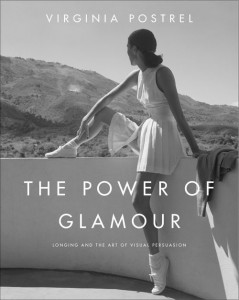
The Power of Glamour and transgender feelings

Seven years ago I talked about the notion of glamour as described by Virginia Postrel. Virginia has been working on a book about glamour, and it was published on Monday. Here’s the definition from the book (as of last year):

Glamour is not the same as beauty, stylishness, luxury, sex appeal, or celebrity. Glamour is, rather, a form of nonverbal rhetoric, which moves and persuades not through words but through images. Glamour takes our inchoate longings and focuses them. By binding image and desire, glamour gives us pleasure, even as it heightens our yearning. It makes us feel that the life we dream of exists, and to desire it even more. We recognize glamour by its emotional effect—a sense of projection and longing—and by the elements from which that effect arises: mystery, grace, and the promise of escape and transformation. The effect and the elements together define what glamour is.

The Power of GlamourYou can probably see why I was immediately struck by the connection to transgender feelings. My strongest trans feeling is that longing to escape from my male reality, with its career obligations and social frustrations, where I’m expected to go out and get what I want, into a dream world where all I have to do is put on the right clothes and everyone will pay attention to me, desire me, and give me what I want. (Yeah, right!)

To me, glamour explains the connection between gender dysphoria, my feeling of unhappiness with being a man, and gender desire, my desire to be a woman, to be seen as a woman. There are lots of men who are unhappy being men, but only some of us want to be women. Glamour helps us understand why we do.

As Virginia has pointed out, this is compatible with the Official Trans Narrative: if you have an innate sense of gender that doesn’t match your physical sex, then you’re likely to be unhappy and thus feel a desire to escape your birth gender classification. But for those of us not convinced by the innatist narrative, glamour opens the door to other explanations.

Since then I’ve followed Virginia on her blogs and on Twitter, and in June she mentioned that she visited my blog while checking footnotes. On Monday night I had the pleasure of meeting her in person at the book launch party, and found that I’m quoted on Page 63, connecting glamour with despair:

I came to the idea of despair based on Virginia’s characterization of glamour as a means of escape. If you’re trying to escape through a fantasy you have to be pretty desperate, right? That’s the sense of “despair” that I mean – a feeling of being trapped and having no options left.

To Angus/Andrea with thanks & best wishes - Virginia

That’s from a comment I left on an article Virginia wrote in 2008, expanding on the connection Salman Rushdie made between terror and glamour. In the book, she expands on my connection to despair by noting the glamour elements highlighted in the documentary Paris Is Burning.

The glamour response is powerful. It can move us to approach strangers, to buy houses, and to blow up buses full of people. It can also move us to cross-dress, to get surgery to change our bodies, and to declare gender transitions.

What I’ve read of the book so far has been great. I encourage anyone who’s interested in transgender feelings to get a copy. I’ll be posting more about it in the future.

Who will sing the black “Lola”?

This weekend I was talking with a bisexual friend, and I described Janet Mock’s vision of a world where trans women will no longer be killed because everyone will see them as women. My friend didn’t even let me finish before she put her finger on one huge problem with Mock’s idea: it only applies to a small subset of potential victims.

Vince Neil, the dude in question.
As we’ve seen, this exact same scenario – boy meets girl, boy decides that girl is “a man,” boy is afraid someone will call him “gay,” boy attacks girl – doesn’t just happen with “trans women.” It happens to people like B. Scott, including when he identified as a gay man, and it happens to people like Bimbo Winehouse, who identifies as a man but wants to be seen as a woman part of the time. It happens to people who aren’t even presenting as a woman. It even happens to guys who aren’t gay at all but simply are mistaken for gay, like Ever Orozco, who was killed earlier this week. It’s pretty clear what the problem is: men lose status if someone thinks they’re gay, they’re afraid of that, so they try to prove they’re not by attacking the person they were attracted to.

What my friend objected to was that Mock’s vision doesn’t do anything about the underlying problem. It doesn’t make it any easier for potential targets who really are gay or straight men and don’t wear women’s clothes. It doesn’t make it easier for people who identify as cross-dressing men. With its relentless hammering on the “trans women are women” dogma, it doesn’t even help people who are viewed and accepted as woman but are reluctant to claim that category for political reasons. It just attempts to draw a charmed circle around people who are willing to claim the status of “woman,” and those who are attracted to them. And of course it doesn’t protect any of us from the violence that is regularly directed at women.

Now I want to look at another vision of a better world. There was a fascinating article by Sue Kerr about the story behind the Aerosmith song “Dude (Looks Like a Lady).” I remember when that song came out. I wasn’t an Aerosmith fan, and i didn’t listen to the lyrics. The refrain sounded like a distress call, the video was boring, and I didn’t want to be a dude that looked like a lady. I wanted to be a lady, or at least a girl. I changed the channel whenever it came on MTV.

The backstory is interesting, though: songwriter Desmond Child told SongFacts about a conversation with Steve Tyler: “He got the idea because they had gone to a bar and had seen a girl at the end of the bar with ginormous blonde rock hair, and the girl turned around and it ended up being Vince Neil from Motley Crue.” Tyler came up with the line, “Dude looks like a lady” and eventually shared it with Child, an out gay man who had been hired by their record label to improve their songwriting. Child liked the line so much he made it the title of the song. Here’s the kicker:

And then Joe (Perry) stepped in and said, “I don’t want to insult the gay community.” I said, “Okay, I’m gay, and I’m not insulted. Let’s write this song.” So I talked them into the whole scenario of a guy that walks into a strip joint and falls in love with the stripper on stage, goes backstage and finds out it’s a guy. But besides that, he’s gonna go with it. He says, “My funky lady, I like it, like it, like it like that.” And so he doesn’t run out of there, he stays.

Note that the narrator is attracted enough to go to bed with her, even though he continues to classify the stripper as a “dude,” and says “Ooh, he was a lady.” I wouldn’t be surprised if Child based it on a friend or acquaintance.

Both the real and fictionalized stories bear some resemblance to the Kinks’ 1970 hit “Lola,” which I heard a lot on the radio. It’s never been my favorite Kinks song, but I did listen to the lyrics. The narrator is ambivalent about how to categorize Lola – there’s the famous line “I’m a man, I’m a man, and so is Lola,” but he uses “she” pronouns throughout.

The backstory to “Lola” is just as interesting. Dave Davies recalled that he was inspired by a party at the home of band manager Robert Wace. “In his apartment, Robert had been dancing with this black woman, and he said, ‘I’m really onto a thing here.’ And it was okay until we left at six in the morning and then I said, ‘Have you seen the stubble?’ He said ‘Yeah,’ but he was too pissed [intoxicated] to care, I think.”

Contrast “Lola” and “Dude Looks Like a Lady” with another song from the eighties, Tone L&#333c’s “Funky Cold Medina.” In the third verse the narrator gives the eponymous aphrodisiac to sexy Sheena, but to his surprise, “Sheena was a man!”

So I threw him out, I don’t fool around with no Oscar Mayer wiener.
You must be sure that your girl is pure for the Funky Cold Medina.
Know what I’m sayin’? Ain’t no playin’ with a man.
This is the eighties, and L&#333c is down with the ladies, no joke.

(As I was putting this post together I came across another post by Andrea James that also mentions “Funky Cold Medina.” James hits on some good points, but I want to go in a slightly different direction.)

“Lola” explores the ambiguity of gender and ends by categorizing Lola as a man, but the final message emphasizes her humanity and the narrator’s affection for her, implicitly concluding that there’s nothing wrong or unmanly with being attracted to a “man,” especially if you’re really plastered. “Dude Looks Like a Lady” echoes the alarm over the stripper’s unexpected dudeness, but ends by affirming her ladyhood and sexiness. In “Funky Cold Medina,” thought, Tone L&#333c responds to Sheena’s manhood with callous rejection (but not violence).

“Lola” and “Funky Cold Medina” both explore the question of what it means to be attracted to a “man.” The narrator of “Lola” is naive and inexperienced, and Lola in fact offers to “make you a man,” by giving him his first sexual experience. Whether or not this happens is left to the listener’s imagination, but the narrator eventually concludes that he can be a man even if Lola is too. Tone L&#333c makes it a point to reassure everyone that he’s “down with the ladies.”

It’s hard not to notice that African Americans are vastly overrepresented in any list of trans people murdered in this country. Correlation is not causation, and it’s important not to discount factors like poverty, discrimination and civic neglect, but I think everyone agrees that American black culture is more intolerant of homosexuality and transgender actions than white culture.

What if a few male black cultural leaders – singers and rappers, but maybe also athletes, politicians and religious leaders – followed the lead of white guys like Dave Davies and Steven Tyler, and black women like Tyra Banks? What if a famous, respected black man spent some of his cultural capital to tell the world that he thinks trans people are sexy, and he’s not afraid of anyone finding out?

I know how this might sound to some people, but I’m not saying “do this because white people do it.” I’m saying give it a try because it might be working for us, just like the Kinks and Aerosmith saw that the music developed by African Americans was more fun and expressive than their own and gave it a try. It’s got more evidence of success than Janet Mock’s magic circle of fiat womanhood.

I think DJ Mister Cee and his boss Ebro Darden have shown enormous courage and humanity, and I think people will respond to that. I’m looking forward to the first black “Lola” to top the charts. The guy who makes that will be gold. After all, Steven Tyler and Dave Davies enjoyed years of success after these songs, and are regarded today as elder statesmen of rock. Tone L&#333c? Well, what’s he done since 1991?

12 things this gender-non-conforming child wanted you to know

This article was clearly well-intentioned, but it really rubbed me the wrong way. I was a gender-non-conforming child, and overall I agree with most of those, but I would never have put them that way.

I most definitely do not sign onto Duron’s #1, and I wouldn’t have when I was a child. If you asked me whether my sex and my gender aligned (by that definition) I would’ve said yes. That did not make me gender conforming.

I also didn’t subscribe to her #3. I was trying to make some people uncomfortable. I was much more into genderfuck rebellion in elementary school than I’ve ever been since.

I was more like four years old here.

Here is my best attempt to reach back through time and channel my eight-year-old self. In the spirit of my #1, and in the grand tradition of Epimenides, take it with a huge grain of salt.

  1. Kids can speak for themselves. Listen to us. Don’t listen to some grownup who says they know what we want. Don’t ever pretend to be one of us, cause you’re not.
  2. Definitely don’t listen to women who say they know what we want. What’s with all these women taking care of us? Can I talk to a man?
  3. Why do women always Peter Pan in plays and movies, anyway? It’s not fair. Peter Pan should be played by a boy!
  4. It’s all right to cry. Boys cry too.
  5. It’s not fair that girls and women get to wear pants or skirts, but boys can’t wear skirts. No, I don’t want a kilt. Yes, I know my name is Angus, I still don’t want a kilt.
  6. It’s not fair that girls can have long or short hair, but people make fun of me for having long hair. I just have long hair because my mom won’t cut it short enough.
  7. Sports are unfair.
  8. People shouldn’t watch horror movies because they’re scary and not real. They should watch happy movies, and Star Wars.
  9. Girl chase is unfair to the girls. I refuse to chase girls.
  10. I won’t go inside the nursery school. Stephanie, my teacher, wore tights yesterday.
  11. Boys can dance too. They can’t be ballerinas, but they can be ballet dancers. They can dance modern dance too, like my mom’s friend Dennis. I want to dance, but I don’t want to be the only boy in the class.
  12. Miss Mary Mack and Miss Lucy and jump rope and jacks look like fun. They should let boys play too.

And yes, I’m aware that I sounded like a child. I was one.

Not because she was a trans woman

Pronouns matter. A few months ago I lost a friend over pronouns. There were other factors, but the breaking point happened when this former friend was complaining about a neighbor of ours, a trans woman. I agreed that it sounded like the woman was being a jerk, but after my former friend told me the story, she called her “it.” I asked her not to dehumanize our neighbor that way, things escalated, and I haven’t talked to her since. I had to change a number of regular routines to avoid my former friend, and the whole experience was very upsetting, but I would do it again in an instant. All for a neighbor who’s never said a word to me. Sometimes pronouns are a big deal.

I mention this now because there’s another case that’s a lot less clear-cut. Last week I went to the vigil for Islan Nettles, who was murdered in Harlem. I’ve been trying to figure out how lives like hers could be saved in the future, but Janet Mock is worried about pronouns, and her post has been going around the net, so I want to respond to it.

My heart dropped each time I watched your face cringe with each misgendering. This is more than semantics, more than a family issue, this is our lives. We all know Islan was beaten to death because she fought hard to be Islan, to be she, to be her.

We don’t all know that. I didn’t know that at the time, so I asked.


Jen Richards was angry:

Laverne Cox told the Huffington Post:

I know as a trans woman, and I think so many trans women in the audience understand, that when we’re misgendered, that is an act of violence for us. It’s a part of the violence that lead to Islan’s death.

No. Misgendering can be a whole range of things, from an honest mistake to incitement to violence, but in itself it is not an act of violence. It’s not part of the cause of Islan Nettles’ death. Nettles was not murdered because she was a trans woman. Here’s what the New York Post reported:

Paris Wilson, 20, is said to have made a pass at Nettles and was shocked to learn she was not born a woman, sources said.

Humiliated in front of his crew, Wilson then got into a heated argument with Nettles and the other women, hurling derogatory slurs at the group.

The two eventually came to blows, but Wilson eventually overpowered Nettles, beating her to a pulp, sources said.

The problem with Richards’s argument – and with Mock’s – is that you don’t have to use female pronouns for this to happen to you. It happened to B. Scott in 2009:

I was just called a faggot by Lewis Dix Jr. of the Jamie Foxx @Foxxhole radio show because he saw me and was confused/attracted.
[…]
people don’t know what gays like me go thru. he came from across the room to speak to me cuz he was attracted and then I said I was a man.

If this had been at a different kind of party – if it had happened on the corner of 148th and Bradhurst, with a violent enough person – B. Scott might have been killed that night. It wouldn’t have been because he was a trans woman, because Scott called himself a man right then. It wouldn’t have been because of pronouns, because Scott doesn’t reject “he” pronouns.

Scott has recently begun identifying as trans, and a few weeks ago I gave props to Mock for accepting him as such, even when Monica Roberts wouldn’t. But she stopped short of identifying him as a “trans woman.”

My wife pointed out that this happens to non-trans women as well. If a man finds out that a woman he’s attracted to is lesbian or that she not interested in him, or if she responds in the “wrong” way, he can feel humiliated and take it out on her.

There’s a whole range between B. Scott’s 2009 presentation and pronouns and Janet Mock’s current presentation and pronouns. Ultimately, the “right” pronouns are not the matter of faith that Mock makes them out to be. It’s not “trans woman” = “she” pronouns. It’s what the person wants. It’s respectful to use “she” pronouns for Chelsea Manning because Chelsea Manning told her lawyer to tell everyone to use “she” pronouns.

Some people want one set of pronouns, some want another, some don’t care. When I present as a woman I prefer “she” pronouns, but if I were killed in a dress I would expect (and prefer) that my family and most of my friends would use “he” pronouns, because that’s how they’ve known me.

From what I’ve heard it sounds like Nettles’ pronoun preference was closer to Mock’s, but it’s not obvious that she would have objected to anyone using “he” pronouns, especially not her family, and maybe not even a certain well-meaning but clueless Gay Man of African Descent. That’s why I asked for some evidence that she cared.

Here we have someone who wasn’t murdered for pronouns and didn’t necessarily object to her family using “he” pronouns. We have a family who says they’re ready to fight for justice and community leaders who say they want safety for all.

The intent of the pronoun user matters as well. When my former friend referred to our neighbor as “it,” I could hear the hate in her voice. In Delores Nettles we have a woman who has shown she is ready to fight for justice for her child, and we tell her that she’s not doing it right because she said “he was a beautiful woman,” instead of “she was a beautiful woman”?

Those of you who are putting the focus on pronouns: I want to know how you think pronouns are the solution. You’ve already schooled Vaughn Taylor. Suppose that tomorrow you could get everyone on that stage, in that park, to switch to “she” pronouns forever, just the way you want. Suppose you could do that for everyone in Harlem, in New York, in the whole country. What would that accomplish?

Please tell me how “she” pronouns would have saved Islan Nettles’ life, when so many unquestioned “shes” have been killed in Harlem. I’m looking forward to your evidence. I’ve got a Ph.D. in language change, and I’d be happy to help guide your research if you need it.

I completely understand if Mock, Richards and a lot of other trans people were carried away by the anger and frustration they felt at the moment. But if we want to actually solve this problem and save lives in the future, we have to put the pronoun issue in perspective. This is not about pronouns, or about being accepted as women.

This is a danger for transitioned trans women like Nettles, but not for trans women alone. Trans women don’t own Islan Nettles’ murder, they don’t own murders of gender-non-conforming people, and they don’t own murders of women. Transitioned trans women don’t know how to make Harlem safe, and they don’t have the right to dictate other people’s response to this tragic killing.

I hope that Mock and Cox will back off the pronoun agenda and refocus their efforts on building safe, welcoming communities for all women and gender-non-conforming people. And I hope that everyone who’s reblogged and linked Mock’s post will now re-read the New York Post‘s description of the events leading up to the murder of Islan Nettles – or any other detailed account – and try to think of one thing that might have prevented it. And write that up, too. Thanks.